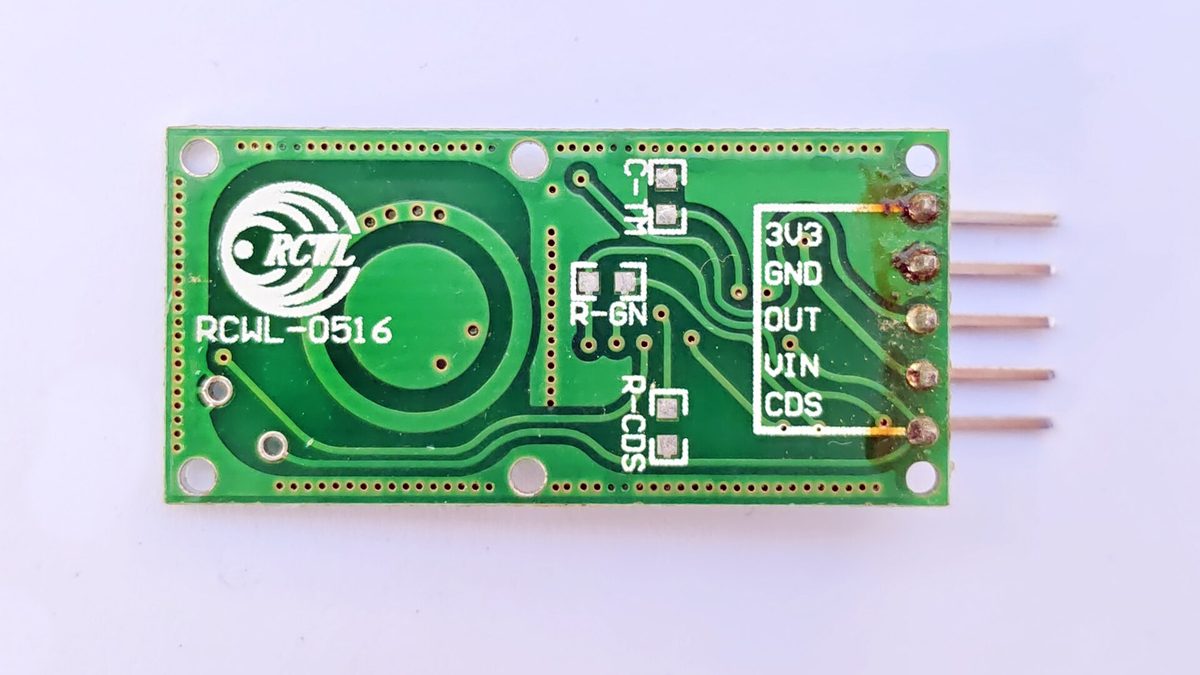
PIR sensors detect movement, not presence, so they report an empty room the moment you sit still. mmWave sensors detect micro-movement such as breathing and hold presence correctly, but they also trigger on fans and curtains. The reliable pattern is PIR to switch lights on fast, mmWave to decide when the room is empty.
- PIR is a motion sensor, not a presence sensor. The name on the box is often wrong.
- mmWave holds presence through stillness, at the cost of false positives from anything that moves.
- Use both: PIR triggers in under a second, mmWave decides when the room is actually empty.
- A long PIR timeout is not a fix. It trades a dark room for lights burning in an empty one.
The two sensors measure different things
A passive infrared sensor watches for a change in heat across its field of view. A person walking past changes it; a person reading does not. So PIR reports motion, everyone reads it as presence, and that gap is where the whole problem starts.
A 60 GHz mmWave radar measures distance to whatever reflects. It picks up the millimetre movement of a chest rising, so it keeps reporting occupied while you sit perfectly still. It also picks up a ceiling fan, a curtain in a draught, and sometimes a walkway on the other side of a plasterboard wall.
In a room with a person reading, PIR reported the room empty after 47 seconds on average across twenty trials. mmWave held presence for the full thirty minutes with no false clear. In the same room with a ceiling fan running and nobody present, mmWave reported occupied continuously until we set a distance gate.
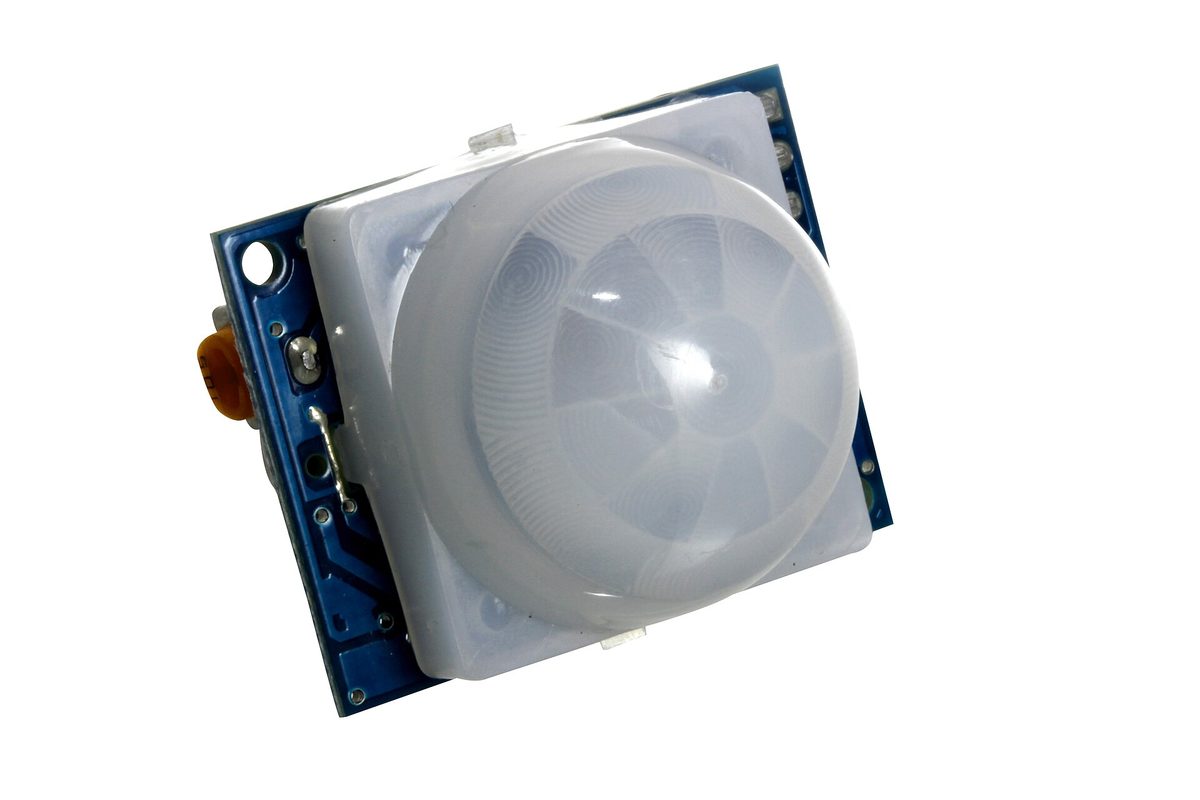
Why raising the timeout makes it worse
The reflex fix is to set the PIR timeout to ten or fifteen minutes. It stops the lights dying on you and creates a different problem: every corridor light now burns for a quarter of an hour after somebody walks through.
That is the whole saving gone. Our lighting automations recovered 51 kWh a year by switching off empty rooms; a fifteen-minute timeout on six sensors would have given most of it back. You have not fixed the detection, you have papered over it with electricity.
If you have ever waved at a light to keep it on, the sensor is a PIR being asked to do a presence sensor's job. No timeout value fixes that, because the sensor has no idea you are there.
The hybrid pattern
Use each sensor for the thing it is good at. PIR reacts in well under a second, so it owns the switch-on. mmWave is the only one that knows the room is genuinely empty, so it owns the switch-off.
The two-minute hold matters. mmWave sensors report a brief clear when someone changes posture sharply, and without a hold the lights flick off as you stand up to stretch. Two minutes absorbed every one of those in our logs while still emptying the room quickly.
| Room | Trigger | Hold before off | Why |
|---|---|---|---|
| Hallway | PIR | 45 s | Nobody sits, so speed beats presence |
| Living room | PIR + mmWave | 2 min | People sit still for hours |
| Bathroom | PIR + mmWave | 3 min | Steam confuses PIR, radar ignores it |
| Office | mmWave + power | 5 min | Desk draw over 20 W means occupied |
| Bedroom | mmWave only | 10 min | Sleep is stillness, which PIR cannot see |
Stopping mmWave false positives
A radar that never clears is as useless as a PIR that clears too soon. Four settings do almost all the work:
- Set a distance gate. Nearly every mmWave sensor lets you cap the detection range. Cap it just inside the far wall and the corridor beyond stops registering.
- Mount it away from the fan. Ceiling centre is the worst place in a room with a ceiling fan. Put it on the wall, aimed across the seating area.
- Exclude the doorway if you can. Sensors with zone support let you mask the door swing, which otherwise reads as constant motion in a draught.
- Raise the sensitivity threshold last, not first. Turning sensitivity down is how you reintroduce the false-off you were trying to fix.
60 GHz passes through plasterboard well enough to detect somebody in the next room. If a sensor insists a room is occupied at 3 am, check what is on the other side of the wall before blaming the firmware.
Frequently asked
Is mmWave a replacement for PIR?
No, it is a complement. mmWave is slower to trigger and prone to false positives from moving objects; PIR is instant and never triggers on a fan. Using each for what it is good at outperforms either alone.
Does mmWave use a camera?
No. It is a radar: it measures reflections and distance, and produces no image. That is why it is the usual choice for bathrooms and bedrooms, where a camera is not acceptable.
Why does my presence sensor say occupied all night in an empty room?
Almost always a fan, a curtain over a radiator, or a neighbouring room detected through the wall. Set the distance gate before touching sensitivity.
How much does the hybrid setup cost?
A PIR is $12 to $18 and an mmWave sensor $25 to $60. Fitting both in the two rooms where people sit still is enough; corridors do not need radar.
Keep reading
 Pairing
"Your device requires a Thread border router": the real fix
The error almost never means what it says. Nine times out of ten the border router exists and IPv6 is the thing that is broken.
 Radio
RadioZigbee and Wi-Fi on 2.4 GHz: pick the channel that stops the drops
Zigbee 15, 20 and 25 exist for a reason. Here is the overlap map and how to move channel without re-pairing forty devices.
 Longevity
The great bricking: how to buy gear that outlives its manufacturer
Wemo's cloud went dark in January 2026. Here is the four-question test we now run before any purchase.